Water
Initiatives for the Efficient Use of Water Resources
The HOYA Group endeavors to effectively utilize water resources in accordance with its Fundamental Environmental Policies. We aim to achieve sustainable water resource management by promoting water reuse and reducing water usage on a global scale.
› HOYA Group Environmental Philosophy and Fundamental Environmental Policies
Water Usage Reduction Targets
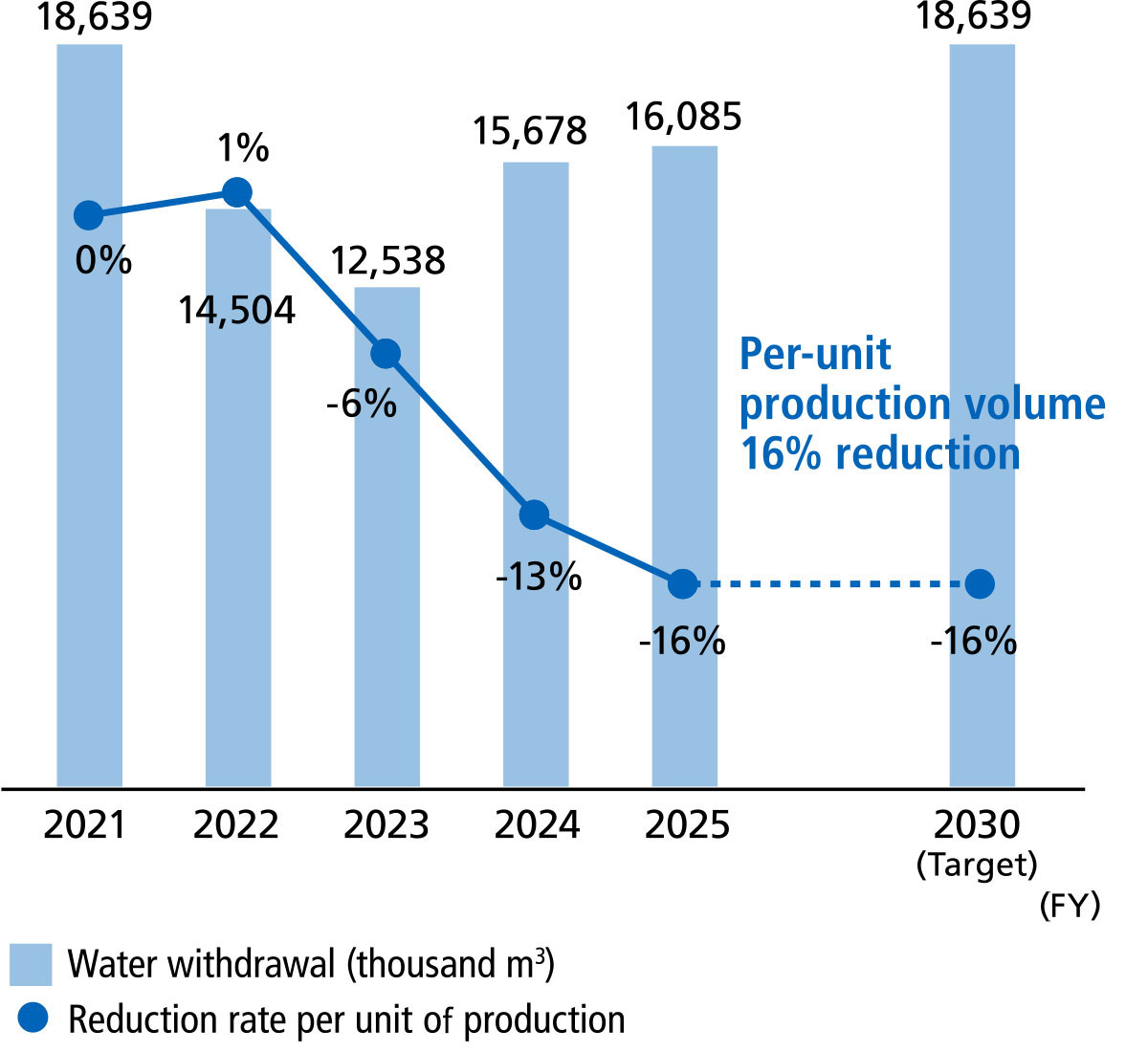
The HOYA Group has established a target for three business divisions with significant water consumption (representing approximately 75% of the Group’s total water withdrawal) to reduce water withdrawal per unit of production by 16% by FY2030 compared with the FY2021 baseline.
In addition, all manufacturing sites are targeted to maintain annual water withdrawal at or below the FY2021 baseline level.
To achieve these targets, each business division has developed its own targets and roadmaps based on site-specific water usage conditions. Particular emphasis is placed on sites with high water consumption and those located in areas with elevated water stress. Initiatives include process improvements and increased water reuse in manufacturing operations. Through these efforts, we aim to reduce overall water consumption while improving water-use efficiency.
As a result, despite increasing production volumes, total water withdrawal in FY2025 decreased by approximately 14% compared with the baseline year, maintaining performance below our target. Water withdrawal intensity per unit of production was reduced by 16% compared with the baseline year, achieving our target level.
HOYA Group water consumption (water intake volume) per-unit target:
16% reduction in water intake per number of products produced* by FY2030 (versus the base year of FY2021). However, we will endeavor to keep total water intake volume below the base year level.
* Number of products produced based on an internally established conversion method to combine operations manufacturing different products
Water Withdrawal
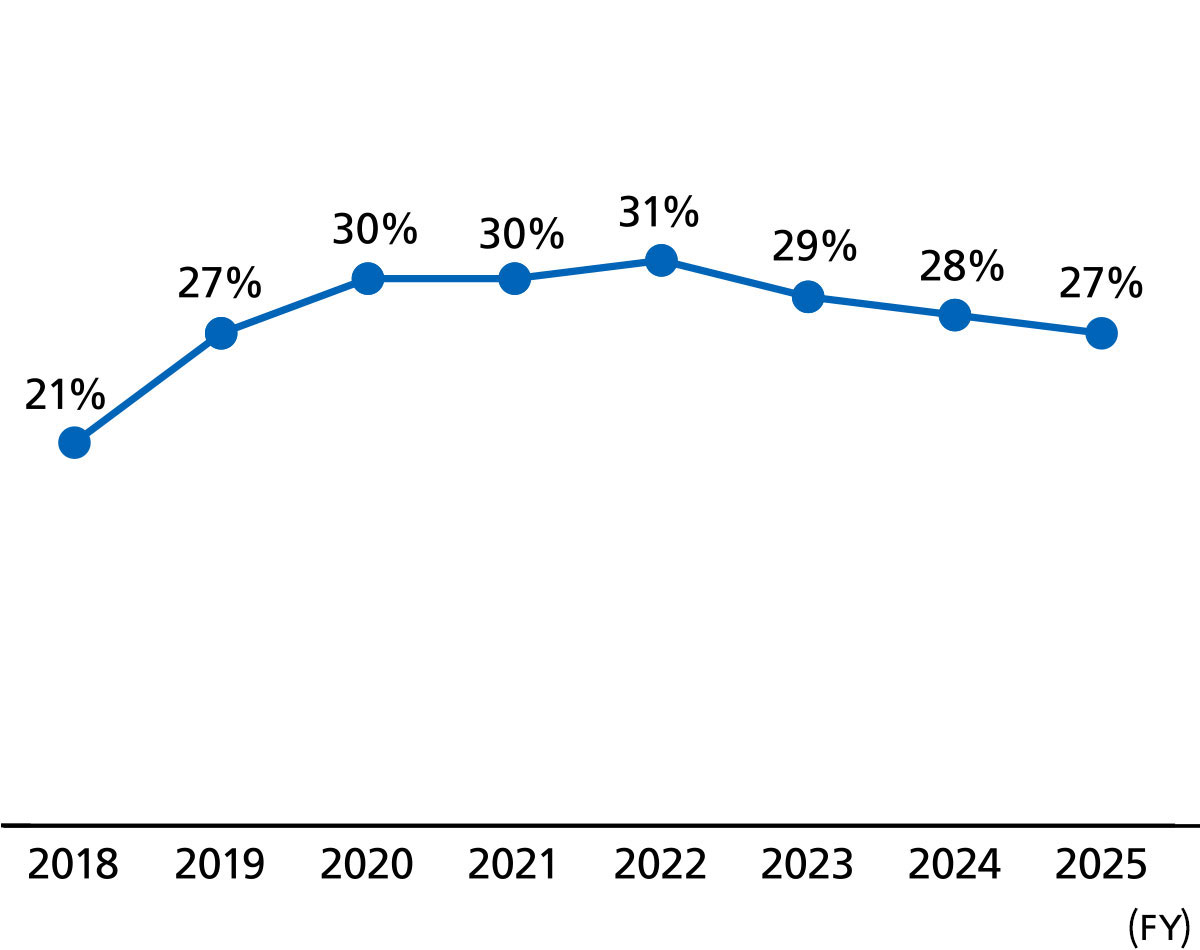
Total water withdrawal by the HOYA Group in FY2025 amounted to 16,085 thousand m³, representing an increase of 3% compared with the previous fiscal year. Meanwhile, water withdrawal intensity per unit of production was reduced by 16% compared with the baseline year, achieving our target level. The water reuse rate remained stable at 27%.
In recent years, we have continuously improved water-use efficiency through initiatives such as manufacturing process optimization and expanded water reuse. In FY2025, we successfully improved water intensity despite increased production volumes, demonstrating steady progress in the efficient use of water resources.
Water Withdrawal
Water Reuse Ratio
Wastewater Management and Water Quality Improvement
The HOYA Group manages wastewater in accordance with applicable laws, regulations, and regional discharge standards, as well as the requirements of the HOYA Group Environmental Facilities Standards. In addition to ensuring the appropriate operation of wastewater treatment facilities, we regularly measure and monitor water quality indicators such as pH, biological oxygen demand (BOD), and water temperature. Water quality testing is also conducted by independent external organizations. Furthermore, the Corporate Environment, Safety and Health Department conducts periodic visits to manufacturing sites to perform internal audits of wastewater treatment facilities and wastewater management systems. Audit findings are incorporated into improvement activities, supporting the continuous enhancement of water quality management.
For example, in the mask blanks manufacturing process, we have reduced the use of chemicals and improved production processes to lower pollutant loads while increasing water recycling rates. We also implement measures to prevent leaks from wastewater facilities and maintain emergency response procedures for potential releases of hazardous substances, helping to minimize impacts on the aquatic environment.
› Reduction of Chemical Substances and Water Recycling in Mask Blank Effluent Treatment
Water Stress Risk
Water is one of the critical resources supporting the HOYA Group’s business activities. In particular, significant volumes of water are used in the manufacturing processes of the MD Business Division (HDD glass substrates) and the VC Business Division (eyeglass lenses).
To support the sustainable use of water resources, we utilize the Aqueduct Water Risk Atlas tool and conduct site-level assessments to comprehensively evaluate water stress risk across our manufacturing locations.
Sites identified as having elevated risk are prioritized for mitigation activities in collaboration with the Corporate Environment, Safety and Health Department. Through these efforts, we seek to improve the efficiency of water use while balancing consideration for local water resources with sustainable business growth.
Region |
Number of Manufacturing Sites |
Sites with High or |
|---|---|---|
Japan |
9 |
0 |
Asia (Excluding Japan) |
30 |
11 |
Americas |
9 |
2 |
EMEA |
11 |
4 |
Total |
59 |
17 |
Water Withdrawal |
Thousand m³ |
|---|---|
Group Total |
16,085 |
Water Withdrawal at Sites Located in Areas |
3,516 |
Water Withdrawal Group Total High / |
22% |
Initiatives to Reuse Water
The HOYA Group promotes water reuse in manufacturing processes to make more effective use of water resources. Across our businesses, we continue to improve water-use efficiency through process optimization and the introduction of water-saving and water-recycling technologies.
-
Recycling of Ultrapure Water in Photomask Manufacturing Process
In the photomask manufacturing process, cleaning is performed by using ultrapure water to remove various chemicals and foreign matter. The used water undergoes a process at an effluent treatment facility to be rendered harmless, some of which is subsequently collected and reused. The ultrapure water recycling facility, which consists of adsorbents and reverse osmosis (RO) membranes, makes it possible to reuse water by removing impurities.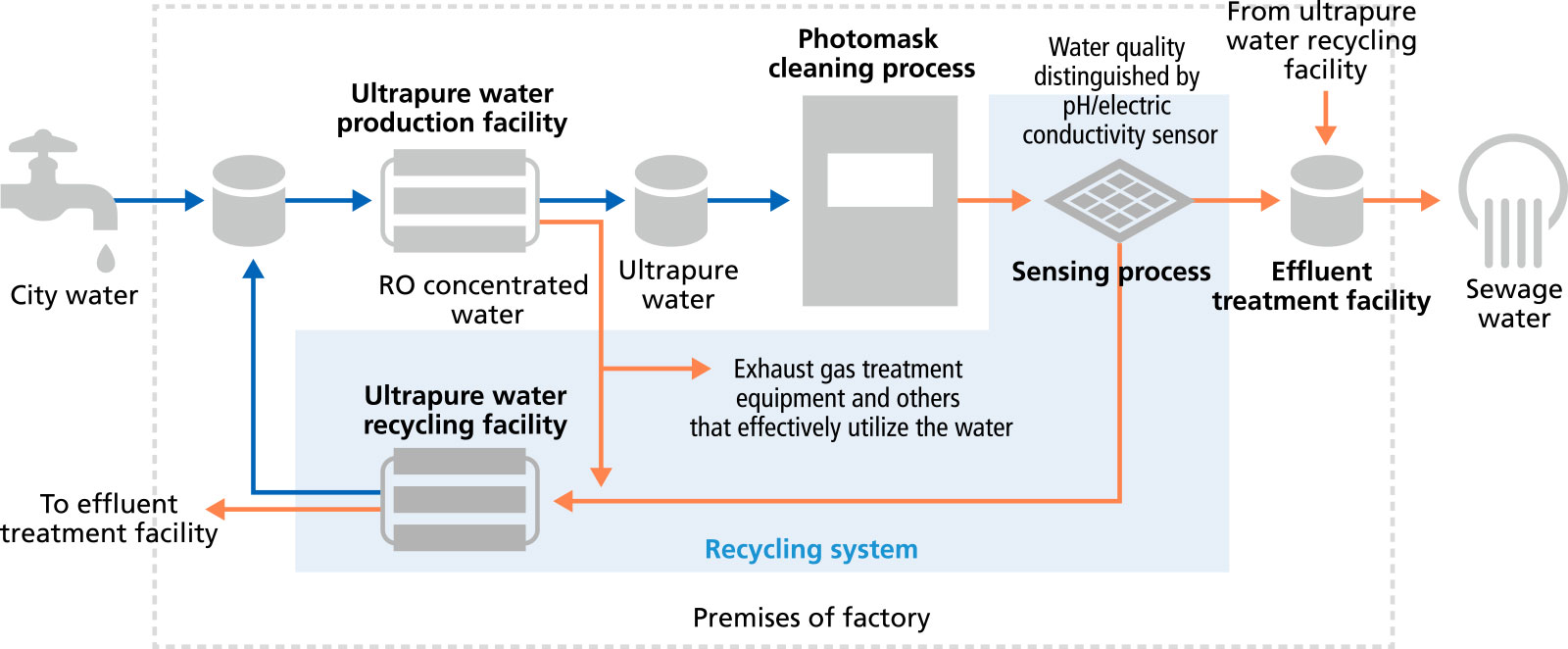
-
Reduction of Chemical Substances and Water recycling in Mask blank Effluent Treatment
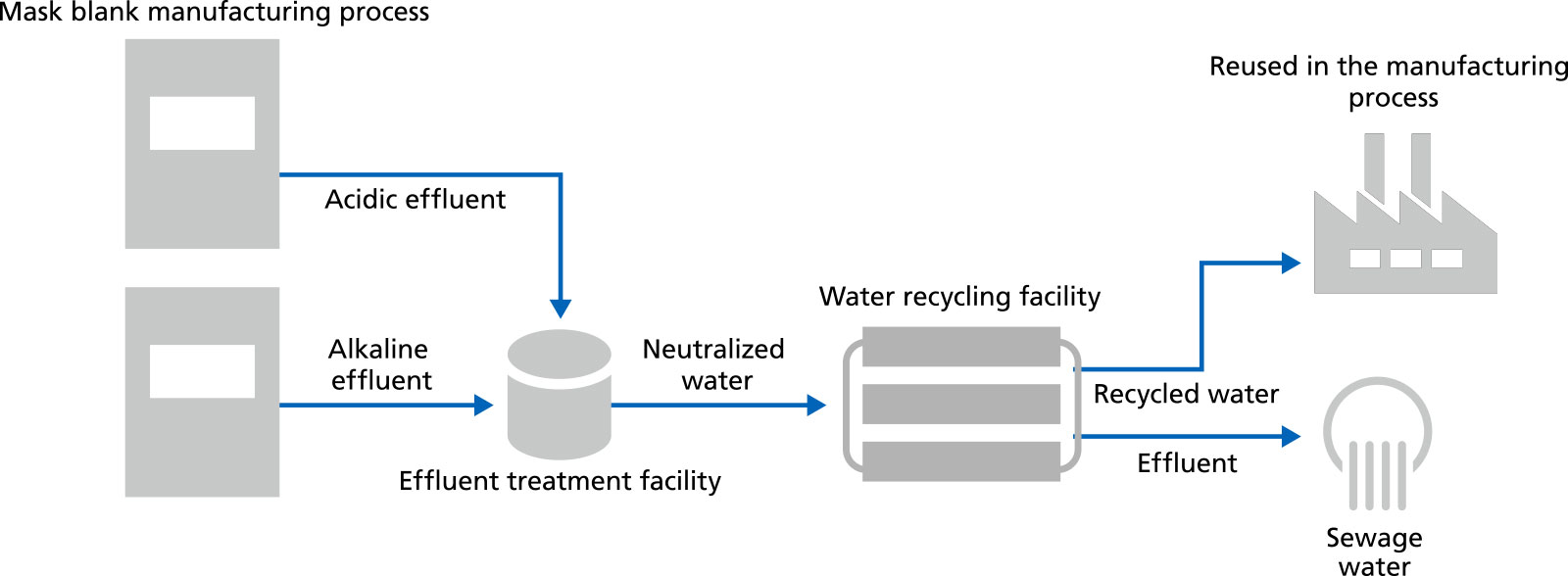
In the mask blank manufacturing process, water and chemicals are mainly used in the cleaning and polishing processes, which then undergo chemical treatment before being neutralized in an effluent treatment facility. Extreme ultraviolet (EUV) mask blanks generate acidic effluent, while optical (deep ultraviolet) mask blanks generate alkaline effluent. By mixing these two types of effluent and neutralizing them, we have reduced the use of additional chemicals in effluent treatment. Furthermore, we have succeeded in reducing the amount of water intake by recycling a portion of the neutralized water. This initiative enables us to reduce environmental impact while effectively utilizing resources.